The amenities residents actually use — and the one that costs nothing
By Hayden8 min read
Ask what apartment building amenities residents want and the honest data gives an unglamorous answer: renters value the things they touch every day — laundry, parcels, reliable connectivity, and increasingly, food and drink they can get at 11 pm without leaving the building. For Vancouver-area condos and rentals, that last one is the interesting case, because it’s the only amenity on the list a building can add at zero cost. Here’s what the surveys actually show, and how the food-access piece works in practice.
The short answer
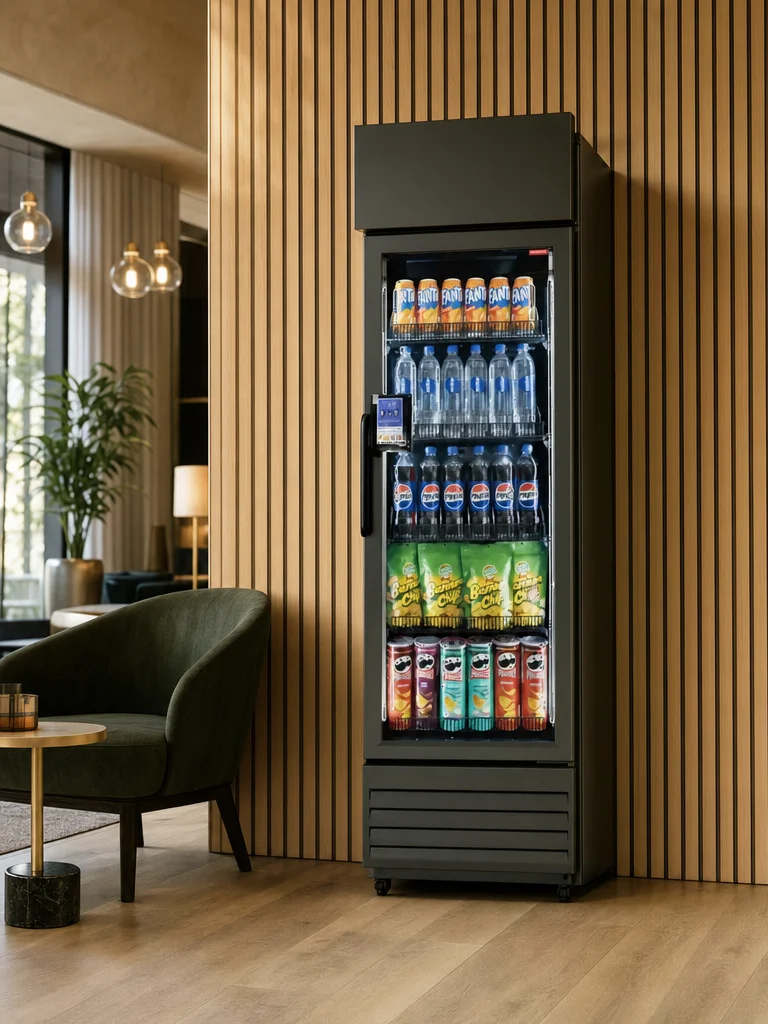
Residents rank practical, daily-frequency conveniences above statement amenities. A rooftop firepit photographs well; the parcel room gets used 300 times a week. On-site grab-and-go food sits firmly in the daily-use category — late-night snacks, post-gym drinks, the forgotten-lunch save — and modern smart coolers let a building offer it without staff, cash handling, or a budget line.
What renter surveys say
The largest dataset on this is the NMHC/Grace Hill Renter Preferences Survey, which gathered responses from over 170,000 renters across 4,200 communities. Its consistent headline: the features renters call essential are overwhelmingly practical — in-unit laundry, air conditioning, reliable cell reception, secure parcel handling — with convenience-oriented community amenities rising every cycle, especially among renters who work from home and treat the building as their whole daytime world.
The same practicality shows up on the retail side. Vending Market Watch’s 2026 state-of-the-industry report tracks unattended retail past US$40 billion, with AI smart coolers becoming a mainstream fixture beyond offices — including residential lobbies and amenity floors. (Both sources are US-based; we flag that whenever we cite them. Metro Vancouver’s tap-first payment culture, if anything, makes the format land more smoothly here.)
Everyday beats flashy
A useful filter for any amenity decision: how many residents touch it in a normal week, and what does each use cost the building? By that math the food-access category is unusual —
- High frequency. Food and drink are daily needs; a stocked cooler by the mailroom gets more weekly interactions than most bookable amenity rooms.
- All-hours relevance. It serves the 6 am gym crowd and the midnight study session equally — hours when nothing nearby is open.
- Zero operating burden. In the placement model, the operator owns and runs everything. No staffing, no shrinkage risk, no maintenance line item.
- Leasing-tour visibility. A warm, glass-door smart store in the lobby is a thing prospective residents can see and immediately understand — a rare amenity that markets itself.
The case for 24/7 food access
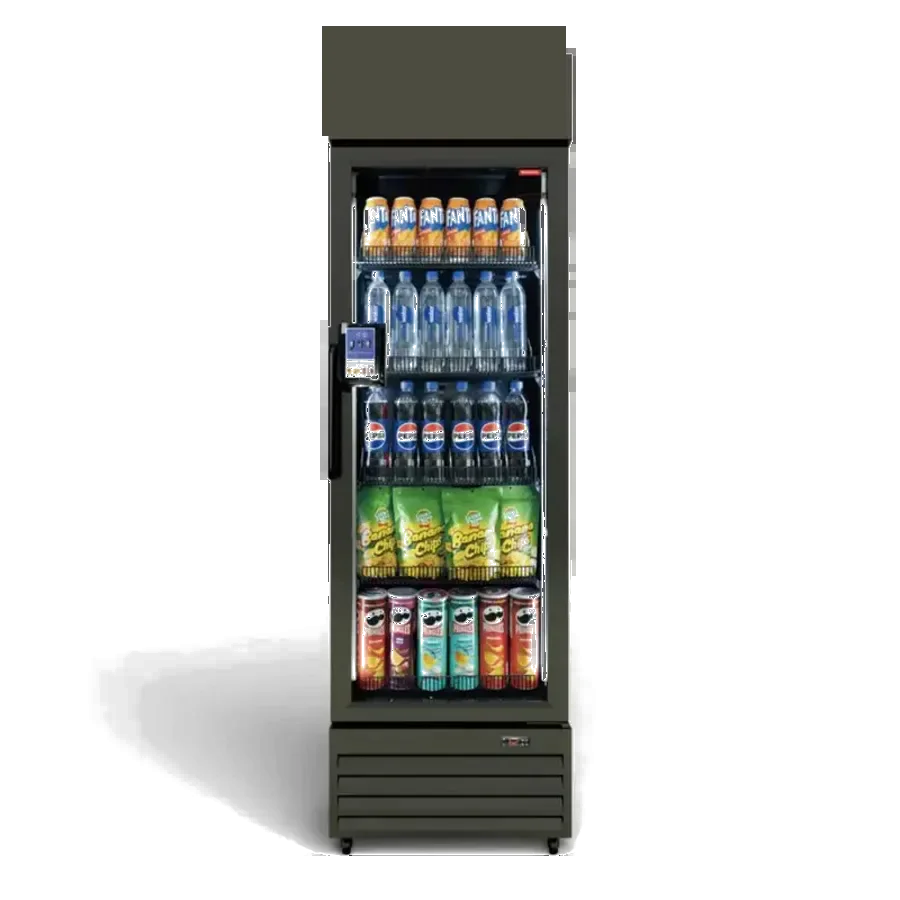
The objection we hear from councils and property managers is never about the idea — it’s about the mental image. “A vending machine in our lobby” conjures a humming beige box with crooked chip bags, and no one wants that next to the concierge desk. The current generation of equipment is a different object: a full-glass retail cooler that stays locked until a resident taps a card or phone, opens like a fridge, and charges automatically for whatever leaves the shelf. Labels can be read, minds can be changed, and the assortment — sparkling water, cold brew, protein snacks, ice cream from a snack store or freezer unit — is tuned to what the building actually buys. The mechanics are covered in our smart coolers vs. vending machines comparison.
What councils and property managers ask
The recurring questions from strata councils and residential PMs, answered straight:
- Liability and insurance — the operator carries commercial liability on the unit; the building’s exposure is comparable to any other serviced fixture.
- Noise and power — modern cabinets run at refrigerator volume off a standard outlet; the footprint is one to two fridge widths.
- Mess and pests — packaged goods only, sealed cabinet, and cleaning is part of every restock visit.
- Contract terms — reasonable operators work on simple agreements with exit clauses; the questions worth asking any operator are listed in how free placement works.
How a building gets one
For Metro Vancouver buildings, the path is short: a fifteen-minute site walk to check traffic, power and placement, a straightforward agreement, and installation on a scheduled day — details on the condos & rentals page. Tidewater handles stocking, service and support from there, and the building simply has a new amenity. If your council or management company is weighing it, request a site visit — free, and genuinely no obligation.
FAQ
Do vending machines increase resident satisfaction in apartment buildings?
Convenience amenities consistently rank high in renter surveys, and 24/7 food access is among the most-used. The format matters, though: a dated machine can read as a downgrade in a nice lobby, while a glass-door smart cooler reads as a boutique amenity. Daily use is what moves satisfaction, and food is a daily-use category.
What does a vending machine or smart cooler cost a strata or landlord?
Nothing, in the standard placement model. The operator owns, installs, stocks, services and insures the unit, and earns from sales. Tidewater places smart stores in Metro Vancouver buildings free, with an optional commission to the building.
How many units does a building need to qualify?
Roughly 80 to 100+ homes gives a compact smart store steady traffic, and less can work when the machine also serves a gym, coworking floor or visiting trades. A short site visit gives a straight answer for a specific building.
Is a smart cooler safe for an unstaffed residential lobby?
It's a better fit than the old format precisely because lobbies are unstaffed. The door stays locked until a card is verified, there's no cash inside to attract break-ins, transactions are camera-verified, and the operator monitors the unit remotely around the clock.
Who handles complaints, refunds and mess?
The operator, not the building. A QR code on the door reaches Tidewater directly for refunds or issues, restocking is scheduled from live inventory data, and the concierge or council never becomes the middleman.
Where should a smart store go in a residential building?
Where residents already pass with a pause: the mail and parcel area, the amenity lounge, beside the gym, or the parkade elevator lobby. Ground-floor visibility helps on leasing tours, too.